
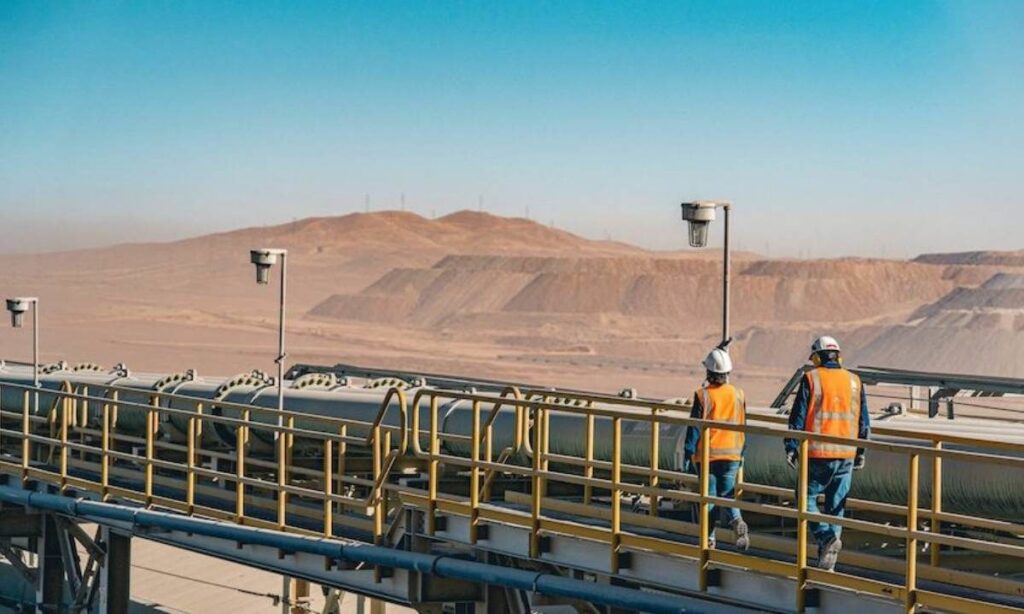
The global energy transition is reshaping the mining industry across South America, including Chile. The adoption of electric vehicles, renewable energy systems, battery storage technologies, and modern power grids leads to the demand for minerals such as copper and lithium. This will lead to increased mining activities throughout Chile, leading to increases in energy consumption. Copper extraction, concentration, smelting, and refining need large amounts of electricity. Lithium processing facilities consume energy to convert raw materials into battery-grade products. Copper and lithium mining encourage Chilean mining companies to expand operations and invest in new projects. Mining companies are also signing renewable power purchase agreements to reduce carbon emissions and follow sustainability commitments demanded by international markets. Mining operations create opportunities for utilities, transmission companies, and power line hardware manufacturers. These operations and interconnections rely on trunnion suspension clamps to maintain stability.
Trunnion suspension clamps serve in the grid expansion to connect large-scale mining operations with new renewable energy projects. The clamp suspends the conductor and transfers its vertical weight to the insulator string and tower. Its trunnion design acts as a pivot that allows the clamp and conductor to swing. This controlled oscillation helps accommodate forces from wind and the thermal expansion and contraction of the conductor. The suspension clamps hold the conductor firmly without excessive pressure that could damage individual strands. This helps prevent abrasion, fretting, and metal fatigue at support points. It also helps extend the lifespan of the clamp and the conductor. Trunnion suspension clamps helps reduce the transfer of high-frequency and low-amplitude vibrations to the rigid insulator string.
Quality assurance for trunnion suspension clamps used in mining and power infrastructure
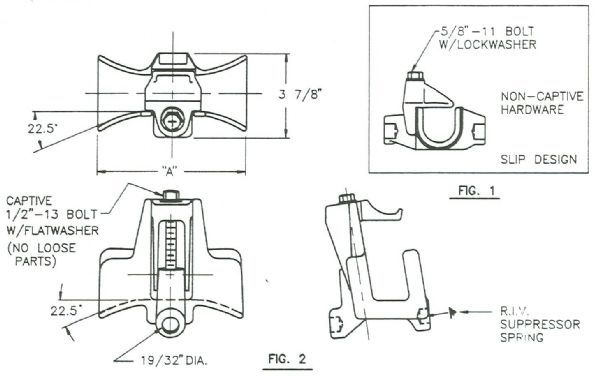
Trunnion suspension clamps support and suspend conductors while allowing controlled movement under mechanical and environmental loading conditions. Quality assurance for the trunnion suspension clamps ensures grid reliability, operational safety, and infrastructure performance. QA ensures the suspension clamps can withstand extreme conditions without compromising conductor integrity or transmission system reliability. The process includes raw material verification, dimensional accuracy inspection, mechanical performance testing, and fatigue and vibration testing. It also includes corrosion resistance verification, electrical performance evaluation, and non-destructive testing. High-quality trunnion clamps comply with standards such as IEC transmission line hardware standards, ASTM material specifications, and ANSI utility hardware requirements.
The roles of trunnion suspension clamps in mining and power infrastructure
Trunnion suspension clamps suspend and support conductors while allowing controlled mechanical movement. The clamps ensure a structural and operational role in ensuring grid reliability in Chile’s mining-driven energy ecosystem. Here are the key roles of the trunnion suspension clamps in mining and power infrastructure in Chile.
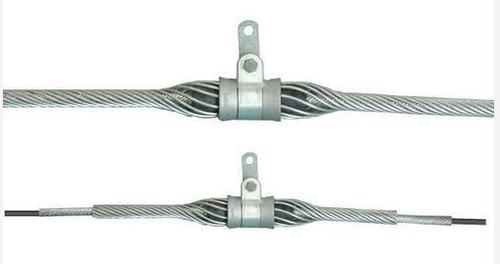
- Structural support for overhead conductors – the suspension clamps support overhead conductors on transmission towers. They carry the weight of conductors, maintain stable vertical suspension points, and prevent excessive mechanical stress.
- Allowing controlled conductor movement—trunnion suspension clamps allow rotational movement of conductors, accommodate thermal expansion and contraction, and enable swing and sway under wind loading.
- Enhancing mechanical stability – the clamps stabilize conductor alignment, reduce dynamic stress, and maintain structural integrity.
- Supporting mining power supply networks – the clamps ensure reliable power delivery to mining facilities. They also ensure stable transmission and reduce the risk of line failure in remote lines.
- Integration with renewable energy transmission—trunnion suspension clamps serve in renewable energy evacuation lines, grid interconnection lines, and hybrid renewable-mining power systems.
Impact of expansion of copper and lithium mining on power infrastructure hardware
The expansion of copper and lithium mining in Chile helps reshape the country’s power infrastructure. Chile’s mining sector is increasing pressure on transmission, distribution, and other substation hardware systems. The expansion leads to:
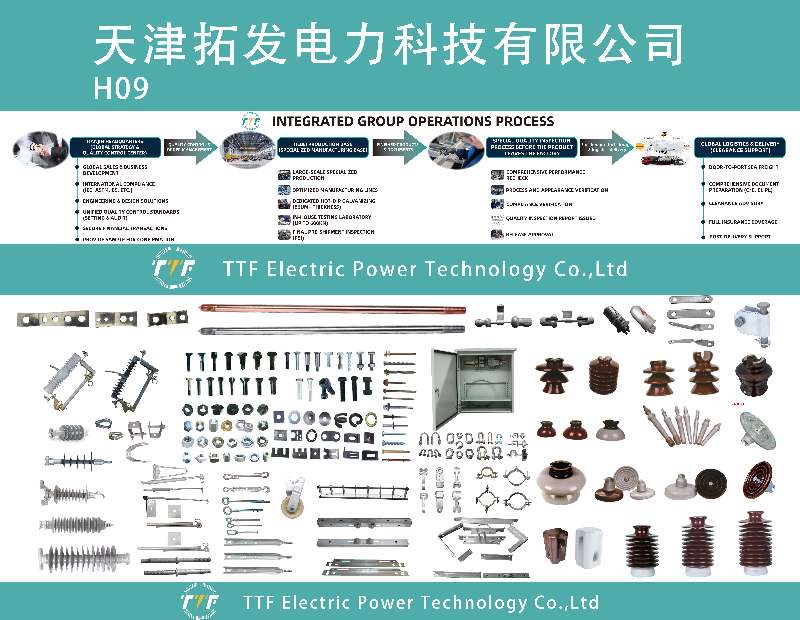
- Increased demand for high-voltage transmission hardware—mining expansion needs new and upgraded transmission lines to deliver electricity. This has led to demand for trunnion suspension clamps, insulator strings, and conductor accessories.
- Growth of modular and prefabricated hardware systems – faster deployment timelines influence hardware design toward modularity. This reduces installation time in remote mining projects.
- Pressure on grid expansion and interconnection hardware—the need for long-distance interconnection has increased demand for suspension assemblies, high-capacity conductor fittings, and flexible joints for terrain variability.
- Integration of renewable energy infrastructure hardware – mining companies use solar and wind energy to power operations. Power line hardware eases interconnection of solar farms, wind farms, hybrid grid interconnection hardware, and energy storage.