
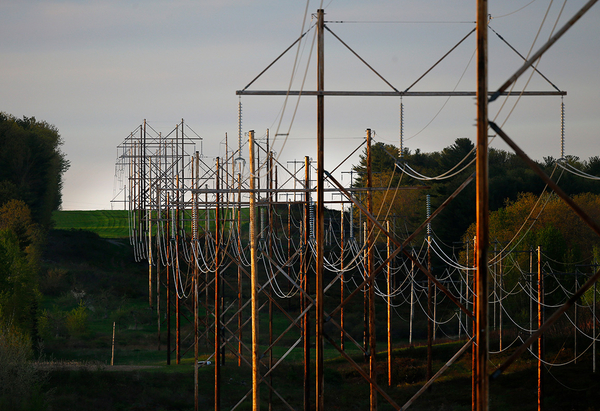
BHP intends to divest approximately US$1.5 billion worth of power transmission assets in Chile, which encompasses 1,000km of transmission lines. These transmission lines provide power to the Escondida, Spence, and Cerro Colorado copper mining operations. A significant part of the funding will focus on expanding mines, upgrading concentrators, integrating renewable energy, and increasing production. The sale will enable BHP to free up capital invested in infrastructure while ensuring access to dependable energy through service contracts with the new owners. Mining activities need much electricity resources to operate crushers, concentrators, pumps, desalination units, and mineral processing plants. Transmission assets will draw investments from infrastructure investment funds, pension funds looking for consistent returns, and transmission utilities functioning in Chile. This may raise the need for transmission parts like suspension clamps, deadend clamps, line post studs, steel eye nuts, and secondary deadend clevis.
A secondary deadend clevis terminates and anchors conductors in power distribution networks. It ensures grid stability and manages mechanical stresses. The clevis provides a secure and durable physical connection in the transmission and distribution infrastructure. It provides a strong mechanical anchor point to terminate the conductors. This keeps lines under proper tension to prevent them from slipping. The deadend clevis transfers heavy mechanical loads from conductors to support structures. This is by protecting other components from excessive stress. Additionally, the secondary deadend clevis maintains the correct alignment of spool insulators. This reduces harmful bending stresses that could lead to insulator failure.
Quality assurance for secondary deadend clevises used in power transmission networks in Chile
Quality assurance for secondary deadend clevis helps secure spool insulators, maintain conductor tension, and ensures mechanical stability at deadends. QA helps prevent failures that can lead to conductor sagging, service interruptions, equipment damage, and increased maintenance costs. The process begins with raw material inspection, dimensional inspection, mechanical strength testing, and galvanization quality control. The hardware undergoes quality checks such as pin diameter accuracy, surface finish inspection, cotter pin retention capability, and proper alignment between pin and clevis holes. Quality assurance ensures that the clevis can support conductor loads, resist corrosion, and provide reliable performance. This is crucial in Chile’s demanding transmission and distribution environments.
The functions of the secondary deadend clevis in power transmission networks
A secondary deadend clevis provides a reliable mechanical connection between conductors, insulators, and support structures. It ensures secure conductor termination while maintaining the integrity and safety of the power line. Here are the functions of the deadends in power transmission networks in Chile.
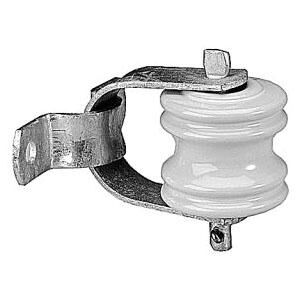
- Connecting dead-end assemblies to insulators—the clevis serves as an interface between dead-end clamps, insulator assemblies, and pole hardware. This allows tensile loads from the conductor to be transferred to the support structure.
- Support conductor tension—the clevis supports conductor pulling forces, maintains proper line tension, and prevents conductor displacement. This is crucial when connecting renewable energy projects to load centers.
- Providing mechanical load transfer—the deadend clevis acts as a load-bearing component that transfers mechanical forces from the conductor system to poles. Load transfer reduces concentrations on adjacent hardware components and improves system reliability.
- Enhancing line stability—the clevis contributes to transmission line stability by anchoring conductors. Stable conductor support helps prevent movement that could lead to mechanical wear.
Effects of incorporating power line equipment with mining activities in Chile
Integrating power line hardware and transmission systems with mining activities in Chile is vital for expanding copper output, promoting renewable energy, and supporting electrification projects. Dependable transmission networks backed by robust power line infrastructure guarantee energy supply to mines and processing plants. Main impacts include:
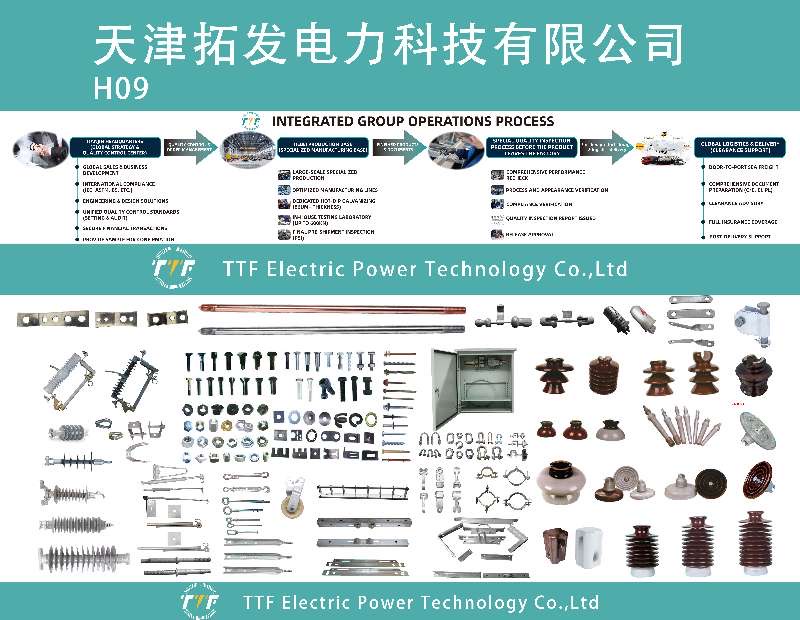
- Enhanced energy reliability for mining activities—power line components like suspension clamps, deadend clamps, guy deadends, insulators, and conductor fittings sustain the structural and electrical integrity of transmission lines.
- Enhanced copper production capability – the incorporation of transmission systems allows mining firms to broaden current operations, start new mining ventures, and boost processing capacity.
- Improved renewable energy integration—transmission systems ease linking solar farms to mining activities and incorporating wind energy initiatives. Mining firms use renewable energy to decrease operational expenses and cut carbon footprints.
- Ease for mining electrification—the mining sector is embracing electrification technologies like electric haul trucks, battery-powered mining machinery, and electrified conveyor systems.