
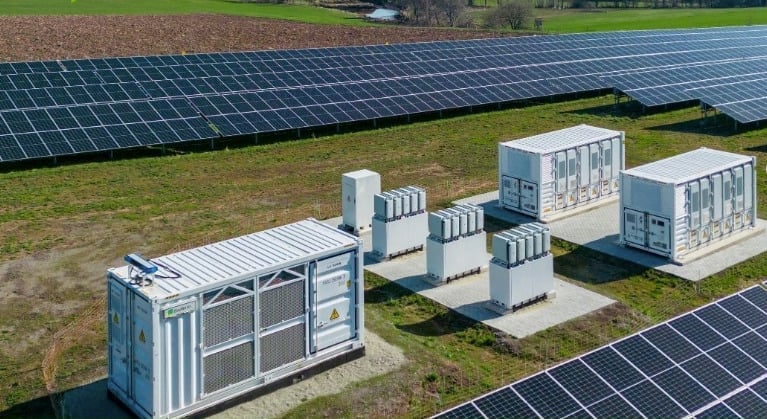
The Victor Jara hybrid plant by ContourGlobal is crucial for Chile’s energy transition and the deployment of long-duration BESS. The project is located in the Tarapaca region and combines a 231 MWp solar photovoltaic facility with a 200 MW/1.3 GW BESS. The project addresses solar intermittency by storing surplus solar generation during daylight hours and dispatching it during peak demand periods. This approach transforms intermittent solar generation into a more reliable and dispatchable energy resource. The project development reduces renewable energy curtailment, improves use of solar generation assets, and enhances grid flexibility and resilience. The success of this project shows that large-scale batteries can extend solar energy availability and make renewable energy a more dependable contributor to modern electricity systems. These connections rely on high-quality cable suspension bolts for interconnections.
Cable suspension bolts attach and secure cables to support structures to ensure system safety, reliability, and longevity. Their connectivity is crucial given Chile’s unique geographical and climatic challenges. The suspension bolts fasten the supporting hardware to a pole or tower to transfer the weight and stress of the cables to the main structure. The bolts provide robust and reliable fastening for the hardware that holds power cables. They ensure safe energy transfer between battery storage units, inverters, and the grid by preventing stress and strain on the conductors. Cable suspension bolts help maintain proper spacing and prevent line slippage. This reduces the risk of unintended contact with grounded structures, short circuits, and flashovers.
Quality assurance for cable suspension bolts used in Chile’s solar plus storage project
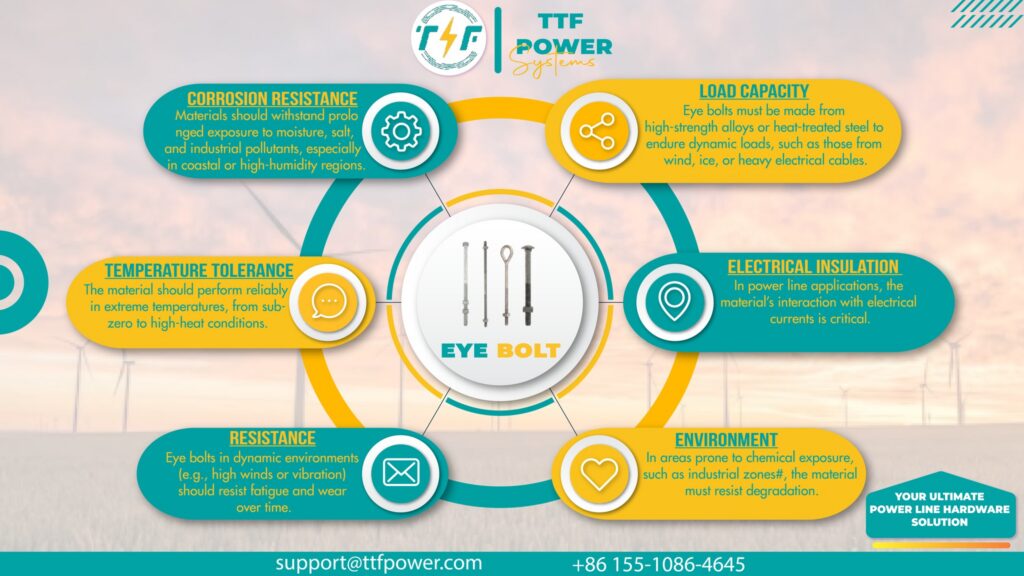
Solar photovoltaic and battery energy storage systems in Chile need high-quality cable suspension bolts. The bolts secure conductors, cable suspension assemblies, support brackets, and transmission hardware that connect renewable energy facilities to substations. Cable suspension bolts undergo quality assurance to ensure safety, reliability, and durability. The process begins by material verification through chemical composition analysis, tensile strength testing, yield strength testing, and hardness testing. The process also includes dimensional accuracy inspection, mechanical strength testing, thread quality inspection, corrosion protection assessment, and non-destructive testing. QA helps ensure that cable suspension bolts provide reliable mechanical support, maintain grid reliability, and withstand environmental conditions in Chile’s renewable energy infrastructure.
The roles of cable suspension bolts in Chile’s solar plus storage project
Cable suspension bolts help connect solar PV plants and battery energy storage systems to substations and the national grid. These bolts contribute to mechanical stability, electrical continuity, and long-term grid reliability. Here are the roles of the suspension bolts in the solar plus storage project.
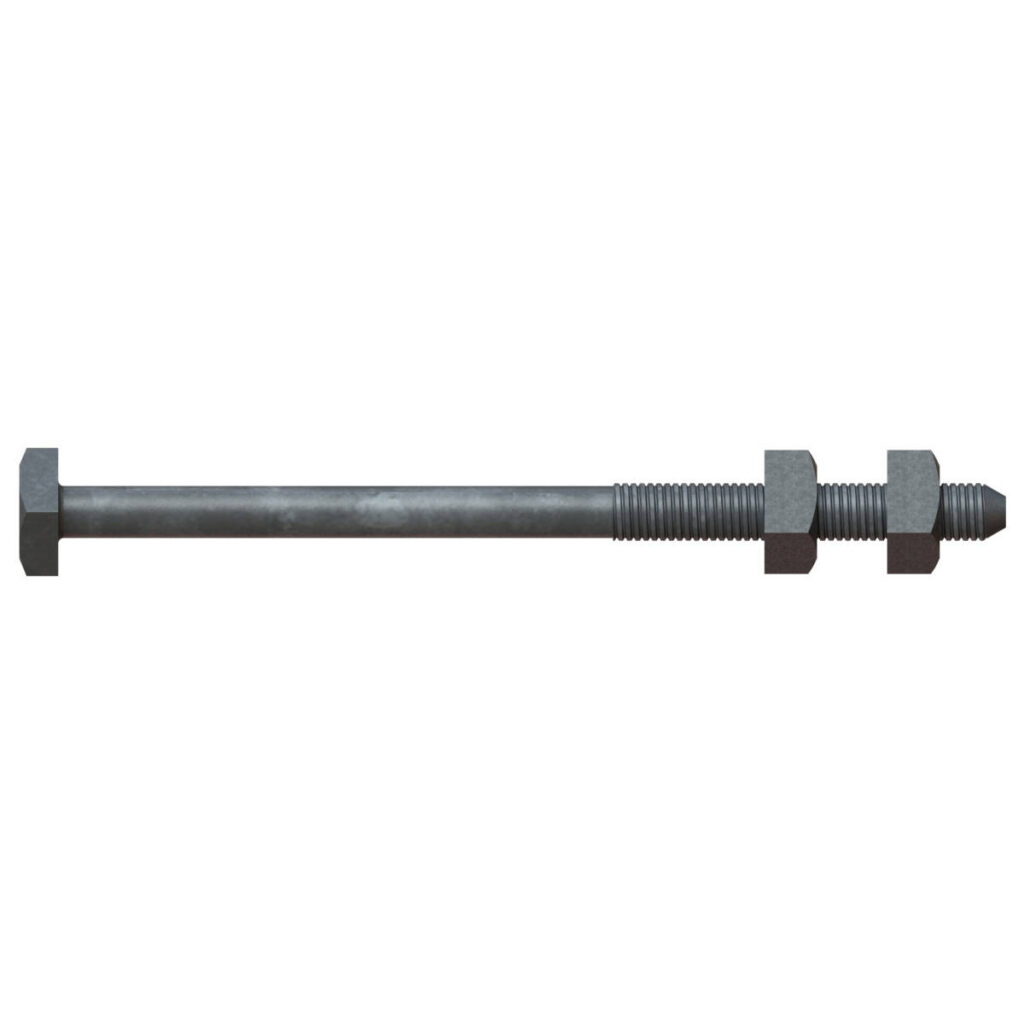
- Mechanical anchoring of suspension assemblies—the cable suspension bolts provide a secure mechanical fastening point within suspension clamp assemblies. This ensures the conductors remain supported while maintaining controlled mechanical tension.
- Load transfer and structural stability—cable suspension bolts transfer forces from conductors through clamps into the supporting tower. They help prevent localized overstressing and structural deformation.
- Maintaining conductor geometry and clearance—suspension bolts stabilize sag profiles across spans, electrical clearance from terrain, and phase-to-phase separation.
- Vibration control support—the bolts prevent loosening under cyclic vibration loads, maintain clamp positioning for vibration dampers, and support consistent mechanical damping performance.
- Enabling articulation in suspension systems—controlled articulation within the suspension assembly enables angular movement of insulator strings and thermal expansion adjustments.
Technologies supporting the Victor Jara solar-plus-BESS project in Chile
The Victor Jara hybrid plant is a utility-scale solar-plus-storage energy system designed to deliver up to 200MW of power. Its performance depends on an integrated set of generation, storage, power electronics, control, and grid-interfacing technologies. These include:
- Utility-scale PV generation technology—these include high-efficiency monocrystalline PV modules, single-axis tracking systems, DC combiner boxes, and advanced anti-soiling coatings.
- Lithium-ion BESS—this includes containerized battery blocks, modular rack-based architecture for scalability, DC battery strings connected to inverter systems, and thermal management systems.
- Power conversion systems and inverters—these help to interface between DC storage/PV and the AC grid. These systems allow the plant to function as a generator and a flexible grid asset.
- Grid interconnection and substation technology—the project uses high-voltage step-up transformers, protection relays and SCADA-controlled switchgear, and synchronization systems for grid stability.
- SCADA, monitoring, and digital twin systems—the plant is supported by advanced SCADA systems that provide fault detection and predictive maintenance alerts. They also integrate digital twin models to stimulate performance and optimize dispatch strategies.