
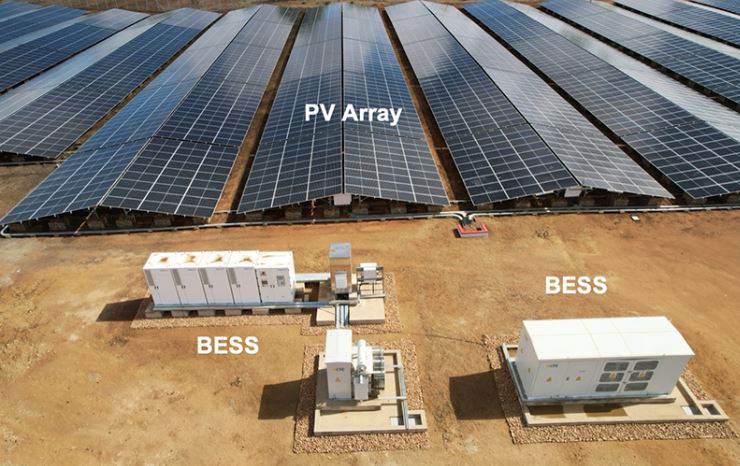
Investments persist in the installation of solar PV, onshore and offshore wind farms, and battery storage systems. The swift advancement of new energy management and control technologies, such as smart meters and programmable energy consumption devices, is also occurring. Amid rising grid instability in Venezuela, the nation is offering measures to help avert blackouts. It also assists in storing surplus energy produced throughout the day and dispensing it when required. This is essential for load distribution in distant regions, maintaining voltage and frequency, and guaranteeing power dependability. Venezuela remains in the initial phases of BESS rollout, yet possesses considerable potential for growth. Important prospects encompass donor-supported pilot initiatives, collaborations between public and private sectors, educational programs, incorporation of BESS in solar installations, and the implementation of blockchain-enabled energy trading platforms. Insulator fittings guarantee the safety, effectiveness, and durability of renewable energy systems.
Insulator fittings secure PV array wiring and overhead distribution lines. They prevent short circuits and ground faults in solar conductors. These fittings prevent current leakage by insulating conductors from mounting structures. Robust insulators reduce line faults, which is crucial in Venezuela’s grid. They ensure stable connections between PV panels, charge controllers, and inverters. Insulator fittings prevent arcing in BESS-to-grid connections during frequent blackouts. They separate high-voltage DC battery lines from AC distribution systems to reduce fire risks. The fittings protect inverter and transformer connections that benefit from dampened insulator fittings. This makes them crucial components in ensuring reliability of solar and storage projects in Venezuela.
Roles of insulator fittings in BESS and solar PV development in Venezuela
Strengthening Venezuela’s fragile power infrastructure through solar PV and battery energy storage systems demands mechanical hardware. Insulator fittings ensure secure mechanical and electrical connections. This is while maintaining the insulator’s integrity in supporting power transmission and distribution lines. Insulator fittings are hardware accessories used to connect insulators to conductors, poles, or support structures. They include components such as ball and socket fittings, clevis and tongue fittings, yoke plates, and clamps. They function in mounting solar arrays, connecting inverters and transformers to substations, and isolating BESS terminals and bus bars. Here are the roles of insulator fittings in BESS and solar PV infrastructure in Venezuela.
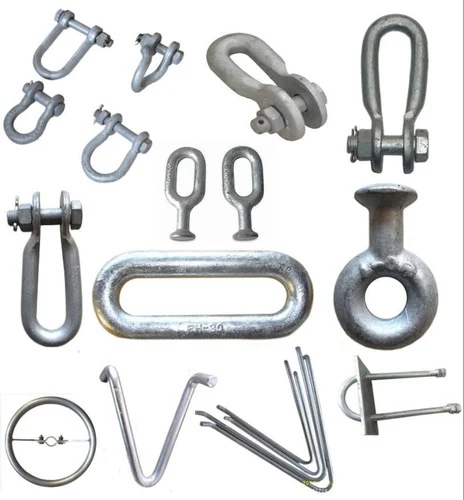
- Ensuring system safety and electrical isolation – insulator fittings maintain electrical clearance between energized components. They prevent arcing, short circuits, and equipment damage under high-voltage conditions during transfer from solar fields to the grid.
- Enhancing mechanical strength – solar and BESS infrastructure operate in extreme Venezuelan climates. Insulator fittings made from corrosion-resistant and high-strength materials provide durability and mechanical stability. This helps withstand environmental stress, vibration, and thermal expansion.
- Grid integration – insulator fittings ensure that PV and BESS systems are safely and reliably connected to the grid. They support voltage regulation, insulation coordination, and mechanical load management. This is crucial for renewable systems to feed energy into Venezuela’s aging grid, helping align with national transmission standards.
- Supporting modular and scalable design – standardized insulator fittings allow for quick assembly, disassembly, or upgrades. This ensures flexibility as renewable infrastructure scales up.
- Mitigating flashover risks – high-quality fittings with proper creepage distances and hydrophobic coatings reduce contamination-related failures.
Technical advantages of merging BESS and solar PV initiatives in Venezuela’s energy landscape.
Venezuela’s electricity sector is plagued by reliance on hydropower, persistent blackouts, and poorly maintained transmission lines. Combining battery energy storage systems with solar PV projects offers a vital technical solution. This integration provides immediate technical advantages that enhance power quality, dependability, and efficiency throughout the energy industry. These advantages consist of:
- Grid stabilization and frequency control – solar PV systems produce power that varies based on sunlight availability. BESS offers immediate frequency assistance by either absorbing or supplying power as required.
- Load shifting and peak demand management – this consolidation alleviates load pressure on hydroelectric facilities and thermal power plants. It additionally avoids enforced load shedding and power outages while smoothing demand curves for a more consistent grid operation.
- Voltage help and reactive power adjustment – BESS can offer reactive power and voltage stabilization to uphold power quality. The integration stabilizes voltage levels, decreases technical losses due to line overloads, and enhances the efficiency of current transformers and substations.
- Infrastructure enhancement – Integrating BESS with solar PV facilitates decentralized energy systems that cut the need for expensive infrastructure improvements. This minimizes investment in new transmission lines and improves power accessibility in distant regions.