

Chile’s energy system is undergoing transformation driven by high renewable penetration, grid expansion, storage deployment, and green hydrogen development. The country is advancing the development and integration of artificial intelligence in the energy system. This improves sustainability metrics, grid reliability, and asset performance across the value chain. Chile has expanded solar and wind generation in the Atacama Desert and northern regions. AI integration into Chile’s energy system contributes to wind speed and ramp forecasting. It also contributes to curtailment reduction algorithms, and satellite-based solar irradiance prediction. The country is also advancing transmission networks to connect northern renewable resources with demand centers. The AI-integration supports real-time congestion management, automated fault detection, and dynamic voltage and frequency regulation. Machine learning models process SCADA and IoT sensor data. They help to increase response speed and reduce human error in grid operations. These integrations use robust power line hardware such as line surge arresters.
Line surge arresters protect and stabilize Chile’s energy infrastructure. They protect expensive and sensitive equipment from damaging voltage spikes and ensure a reliable power supply for the country. The arresters divert dangerous high-voltage surges to the ground and safeguard lines, transformers, and substations. This protects infrastructure across Chile’s diverse and challenging terrain. The arresters mitigate voltage fluctuations that can lead to grid instability. This is important for variable renewable energy sources. They help prevent broader grid disturbances and blackouts by maintaining power quality. The arresters protect sensitive components of solar and wind farms such as inverters and control systems from voltage spikes.
Quality assurance for the line surge arresters for use in Chile’s energy systems supported by AI

Quality assurance for line surge arresters in Chile’s AI-integrated energy systems is crucial for reliability. Surge protection devices operate with high precision under variable load, seismic exposure, and harsh environmental conditions. Quality assurance ensures electrical integrity, mechanical robustness, and lifecycle predictability. Line surge arresters undergo several tests, including the residual voltage test, the lightning impulse withstand test, the switching impulse current test, the temporary overvoltage performance test, and the energy absorption capability test. Quality assurance must verify ZnO block energy rating, porcelain or polymeric housing quality, seal integrity against moisture ingress, and corrosion resistance for coastal or desert exposure. AI-supported infrastructure aims for high uptime and predictive maintenance. Surge arresters must show long-term durability through aging tests, salt fog testing, UV resistance testing, and thermal cycling. These tests confirm that performance parameters remain stable over operational life.
Line surge arresters in Chile’s AI-integrated energy systems and infrastructure
Line surge arresters in Chile’s AI-integrated energy systems help maintain asset integrity, data reliability, and operational continuity. The arresters control transient overvoltages, protect sensitive digital systems, reduce outage risks, and enable renewable-heavy grid stability. They ensure the physical layer of the grid remains resilient against electrical stress events. Key functions include:
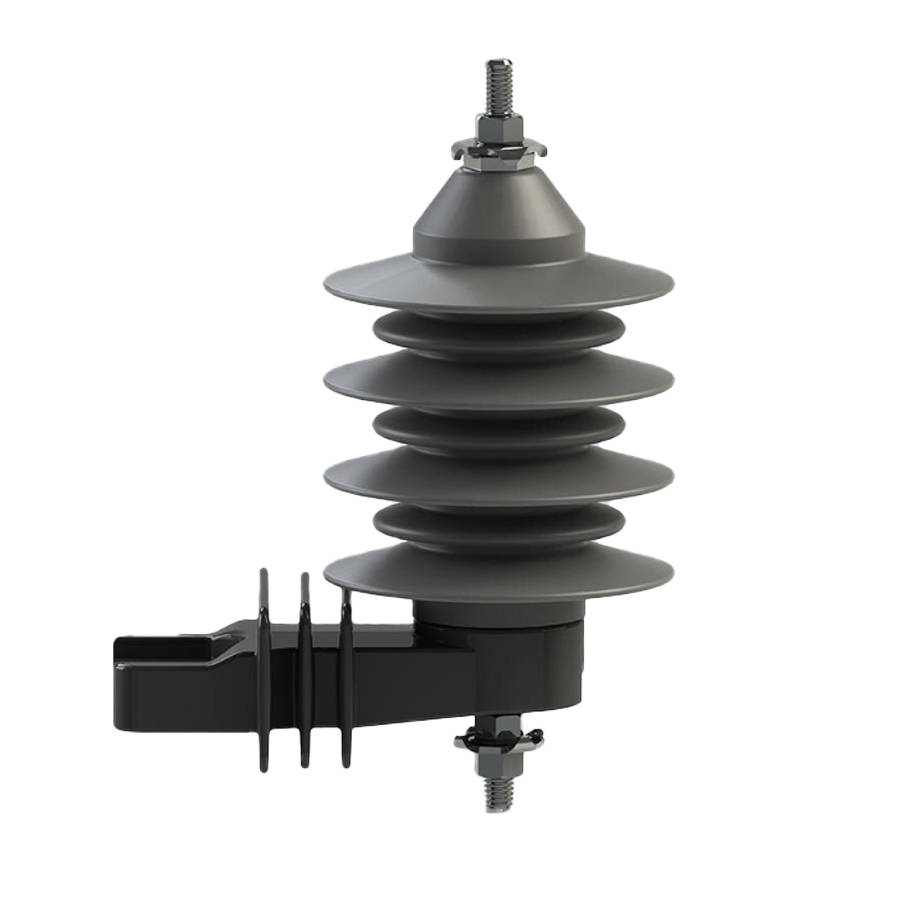
- Overvoltage protection in renewable-dense networks—line surge arresters limit transient overvoltages. They divert surge current to ground, clamping voltage to safe residual levels, and preventing flashover across insulators.
- Protection of AI-controlled grid infrastructure—surge arresters protect sensitive digital equipment from impulse events that could damage control electronics, corrupt sensor data, and trigger false AI-based fault diagnostics.
- Reducing outage frequency—the arresters reduce insulator flashovers, transmission line trips, and cascading faults. They support AI-based grid optimization systems that depend on predictable infrastructure availability.
- Enhancing renewable integration stability—surge arresters protect inverter transformers, shield converter stations, and prevent DC-side transient damage.
AI models supporting Chile’s energy systems and infrastructure
The development of AI-supported energy systems in Chile depends on artificial intelligence models tailored to forecasting, optimization, and data-driven decision support. The models vary from locally developed machine learning algorithms to advanced forecasting tools deployed by international energy technology providers. The key AI models include:
- Renewable generation forecasting models—these include predictive generation models, machine-learning-based probabilistic forecasting of solar irradiance tailored to Chile’s conditions and hybrid forecasting research.
- Energy market and load forecasting engines—this model uses machine learning and regression-style pipelines. They help to generate accurate and interpretable forecasts that utilities and system operators can embed into planning.
- Grid planning and scenario simulations—grid planning tools with AI integration can integrate advanced forecasting models. They enable planners to simulate many infrastructure and generation growth scenarios. They also help analyze renewable integration constraints.
- Grid data analytics and monitoring agents—these include AI for transmission and network analytics that cleanse, structure, and interpret heterogeneous data streams.