
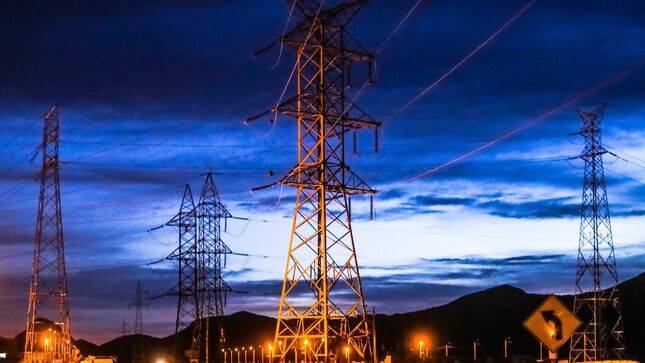
Peru’s agency for the promotion of private investment, ProInversion, launched a portfolio of eight electrical transmission projects. The development of this project will need a total investment totaling around $557 million. The award through a public tender process under the private investment promotion regime will attract specialized firms to finance, build, and operate the infrastructure. This investment is a transformative development for Peru’s energy sector with impacts on reliability, renewable integration, economic growth, and regional development. These new lines will reduce grid congestion and ensure that generated electricity is efficiently delivered to demand centers. An interconnected grid is less vulnerable to cascading failures. It creates many pathways for electricity to flow and improve the resilience of the system. This leads to a more stable and secure power supply for households and businesses. Suspension insulators support the heavy weight of the conductor and the mechanical tensions on it.
Quality insulators electrically isolate the high-voltage live conductor from the grounded metal transmission tower and prevent current from flowing into the structures. Suspension insulators hang down from the towers’ cross-arms and hold the conductor from below. This design provides specific advantages for Peru’s diverse geography. Peru’s new transmission lines will traverse the challenging Andes mountains, where the ground is uneven. A suspension insulator string can swing and adjust to mechanical loads. The flexibility allows towers to be placed on steep slopes and at different elevations without imposing uneven stress on the tower structure. These towers are designed to support the weight of the conductor. Suspension insulators are from materials such as porcelain and polymer that help reduce corrosion and reduce maintenance downtime. The voltage level of the transmission line determines the length of the insulator string and the number of discs.
Suspension insulators in Peru’s new transmission line development
Peru launched a $557 million investment for eight new transmission projects that demand reliability and safety. Suspension insulators are key components that keep high-voltage conductors securely supported while electrically isolated from the towers. Suspension insulators support the weight of the conductors between towers and maintain the needed clearance from the ground and other objects. They provide high-voltage insulation to prevent electricity from leaking into the metal towers and causing faults. Here are the functions of suspension insulators in Peru’s new transmission line development.
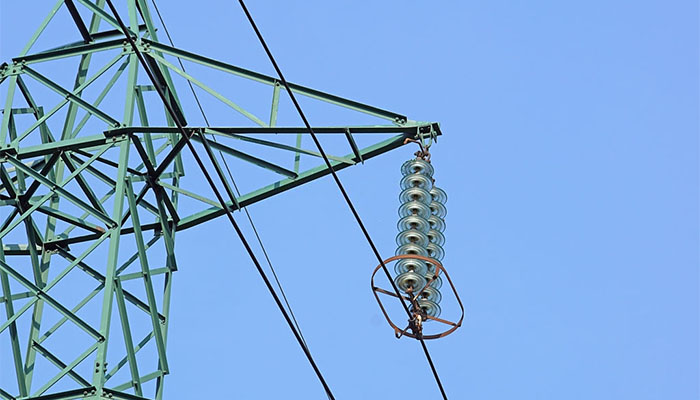
- Supporting high-voltage expansion—the new 220 kV and 500 kV lines demand robust insulators capable of handling higher electrical stresses. Suspension insulators maintain safe electrical clearance at the voltages.
- Resilience in harsh environments—transmission lines will cross diverse terrains, including coastal zones, Andean highlands, and the Amazon basin. Suspension insulators are from ceramic, glass, or polymer composites that offer durability against pollution, weathering, and mechanical stress in the environments.
- Ensuring grid reliability—a single insulator failure can cause line trips, outages, or cascading faults. Suspension insulators ensure consistent insulation along each span. Their modular design allows utilities to adjust the number of insulators per string based on voltage, environmental pollution levels, and mechanical loading.
- Integration of renewable energy—new transmission corridors are able to evacuate power from renewable hubs. Suspension insulators ensure the safe transfer of renewable electricity across long distances to urban centers.
Technologies supporting new transmission development in Peru
The $557 million investment is about building a smarter, stronger, and more resilient grid. This investment will speed up the deployment of advanced technologies that address Peru’s unique geographical and climatic challenges. These technologies are as discussed below.
- Advanced conductors—this helps replace traditional steel-reinforced conductors with modern materials. New conductors used include ACCC and HTLS conductors that offer increased capacity, longer spans, and efficiency.
- Flexible AC transmission systems—power electronics-based devices—enhance controllability, stability, and power transfer capacity of the AC grid. New transmission lines are essential for integrating renewable energy and stabilizing the long lines. They provide voltage stability and increasing use.
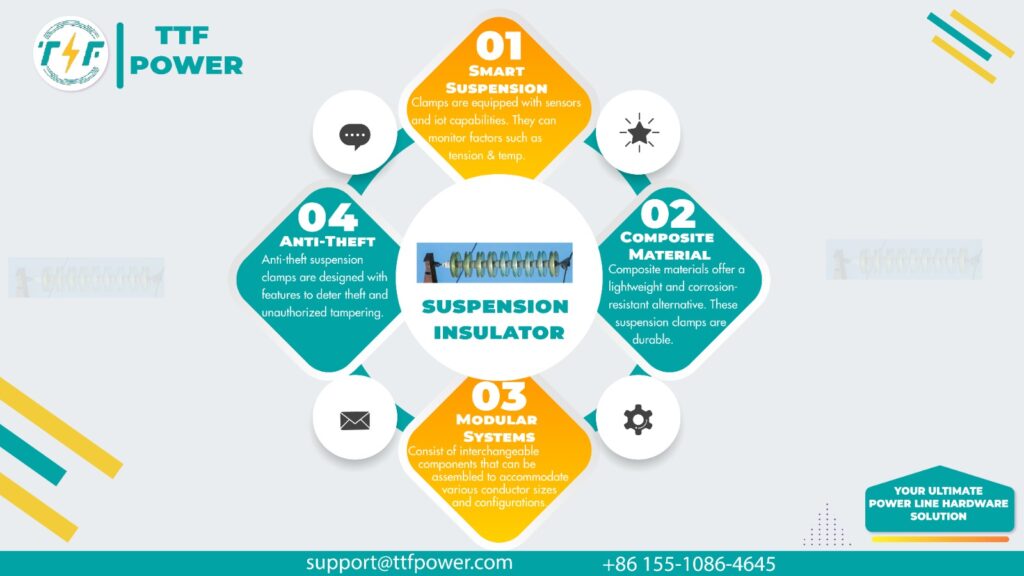
- Advanced insulation—these insulators are from a core of fiberglass-reinforced resin protected by weather sheds of silicone rubber. This makes them lightweight, hydrophobic, and vandalism resistant.
- Advanced monitoring and drones—this includes the use of unmanned aerial vehicles equipped with thermal, UV, and visual cameras for inspection. Thermal imaging detects hot spots at connection points, and corona detection shows problems or damaged hardware.
- Geographic information systems and digital twin technology—this includes creating a dynamic, virtual model of the entire transmission network fed with real-time data from sensors.