

The 2 GW solar and renewable energy project in the Atacama Desert represents a crucial moment in South America’s renewable energy landscape. The project will be the largest renewable installation in the region. The increased capacity can help power homes, reduce carbon emissions, and strengthen Chile’s energy independence. The capacity in the Atacama Desert makes it an ideal setting for solar energy generation. It also ensures efficiency and year-round performance. This project development speeds up progress towards carbon neutrality by expanding renewable capacity, supporting decarbonization of industry, and enhancing grid stability through integration of energy storage systems. Using insulator brackets improves reliability, safety, and longevity of the project. It holds one or more insulators, which support the electrical conductors carrying generated power.
High-quality brackets provide a platform to support the weight of the heavy electrical cables and the insulators. The Atacama Desert can experience powerful and sandy winds that exert lateral and uplift forces on the long spans of cable. The brackets can withstand the constant and extreme mechanical loads without bending, fatiguing, or falling over the project lifespan. The insulator bracket’s design positions the insulator, creating a safe and reliable air gap between the energized, current-carrying conductor and the grounded pole structure. The insulator provides a creepage distance to prevent flashovers and arcs.
In the Atacama Desert, the insulator brackets must resist UV degradation, corrosion from salty air, and abrasion from sand and dust. The brackets allow for different electrical configurations on a single pole. The 2 GW project has complex electrical collection systems. Different types of brackets mount on the same pole to manage all the different lines.
Technological innovations supporting the 2 GW solar project

The 2 GW project integrates the most advanced innovations in solar generation, energy storage, and digital management. It is crucial in transforming Chile’s energy landscape and setting a new benchmark for renewable infrastructure. The solar infrastructure uses bifacial PV technology, monocrystalline cell architecture, anti-soiling coating, and smart string inverters. It also uses advanced solar tracking systems that track the sun’s movement to ensure the panels face the optimal angle throughout the day. Key technologies used include sensors, GPS, and AI algorithms. Since solar energy is intermittent, use of battery energy storage systems helps ensure grid stability and continuous power supply. The innovation includes modular and scalable storage architecture that allows for easy expansion and integration with future technologies.
Functions of the insulator brackets in the 2 GW solar project in Chile
Insulator brackets ensure the mechanical stability, electrical insulation, and safety of the entire power transmission and distribution system. The components are essential for supporting the high-voltage infrastructure connecting the solar arrays to substations. Here are the functions of the insulator bracket in the solar project.

- Mechanical support for insulators—the bracket holds and supports electrical insulators on poles and towers. They provide rigid mechanical support and ensure that insulators maintain correct alignment and spacing between conductors.
- Electrical isolation and safety—insulator brackets enable safe separation between live electrical parts and metallic supporting structures. The brackets ensure that high-voltage circuits remain isolated to protect equipment from electrical faults.
- Structural stability—the insulator bracket ensures mechanical tension and compression forces from overhead conductors.
- Support in transmission and substation equipment—insulator brackets provide insulation for medium-voltage interconnections between inverters and step-up transformers. They ensure safe power transfer from solar panels to the grid with minimal power losses.
Influence of the 2 GW project on Chile’s grid integration
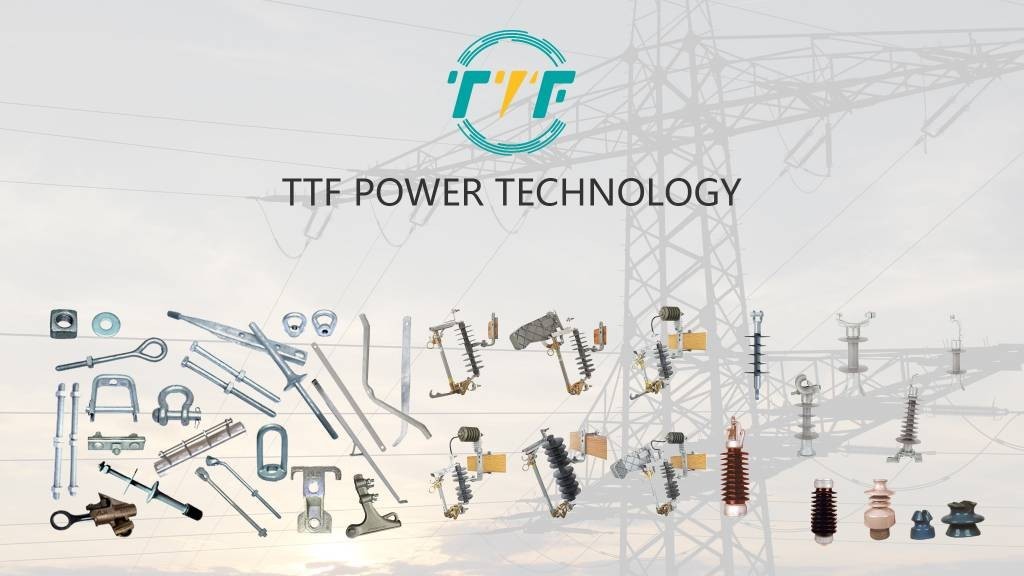
The project has a reflective impact on Chile’s grid integration efforts, driving modernization, stability, and sustainability within the National Electrical System (SEN). The 2 GW of intermittent solar energy is advancing toward a smarter, more digitalized grid. The project necessitates upgrades in substation automation, real-time data systems, and AI-based grid management. Smart grid technologies enable operators to predict and respond to fluctuations in solar generation. The project addresses this through battery energy storage systems integrated at various points in the network. The batteries store excess energy generated during the day and discharge it during peak hours. This helps stabilize frequency and voltage levels. The 2 GW project requires high-voltage transmission lines to transport energy efficiently over long distances. This demands the use of robust power line hardware components like the insulator brackets. The new transmission lines reduce congestion in the existing network and enable clean energy exports.