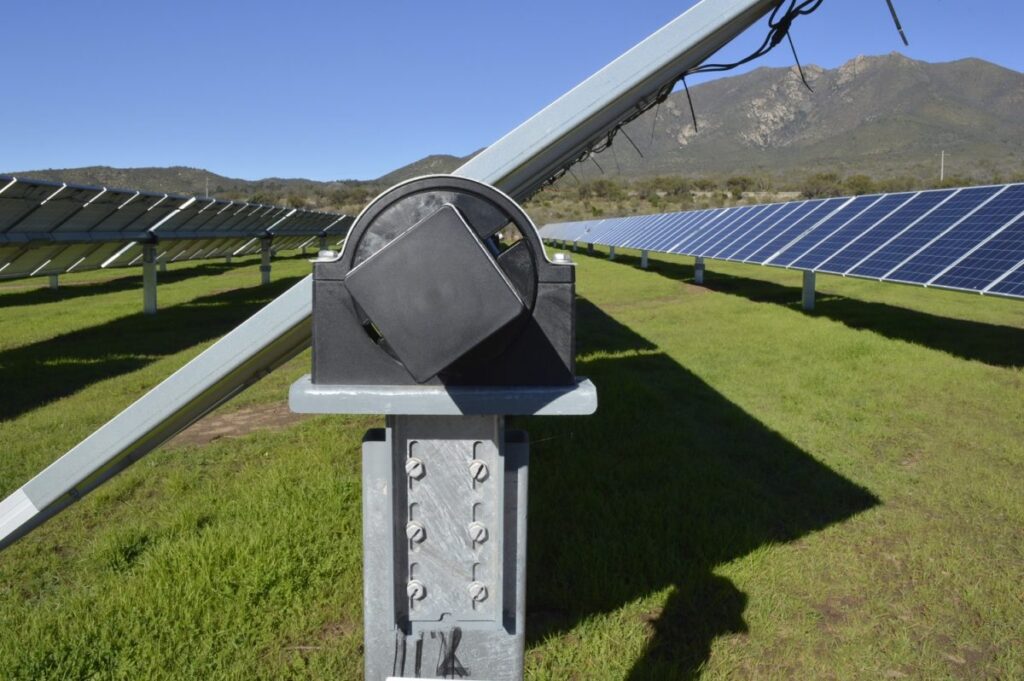
The El Quemado solar farm by YPF Luz marks a significant milestone in Argentina’s renewable energy expansion. It has an installed capacity of 305 MW and positions the Mendoza Province as a major solar generation hub while strengthening the transition toward utility-scale clean energy infrastructure. The project integrates large-scale photovoltaic generation with advanced solar tracking and grid integration technologies to maximize efficiency and energy output. This project will include 511,000 bifacial photovoltaic modules, 5,800 solar trackers, 1,170 inverters, and 40 transformer stations. Bifacial photovoltaic modules generate electricity from both sides of the panel and increase energy yield compared to monofacial systems. The project contributes to Argentina’s renewable generation portfolio and supports national clean energy targets. It also helps diversify Argentina’s electricity mix and reduce exposure to fuel price volatility. The integration of these systems relies on robust hardware components such as downlead clamps.
Downlead clamps secure and protect vertical or inclined cables on transmission towers and other structures. They ensure the safety, reliability, and longevity of the electrical and communication infrastructure. The clamps secure grounding conductors to create a low-resistance path for fault currents and lightning strikes to safely dissipate into the earth. They protect sensitive solar equipment from damage in diverse environmental conditions. The clamps anchor cables to structures to prevent excessive movement, swaying, and whipping. This prevents mechanical fatigue and damage to cables from constant vibration and thermal expansion. Downlead clamps act as a protective buffer between cables and the sharp edges of steel towers. This prevents abrasion and maintain the correct bending radius. Additionally, they manage complex cable systems in large-scale projects. They allow the integration of battery storage systems and the national grid.
Quality assurance for downlead clamps used in solar farms in Argentina
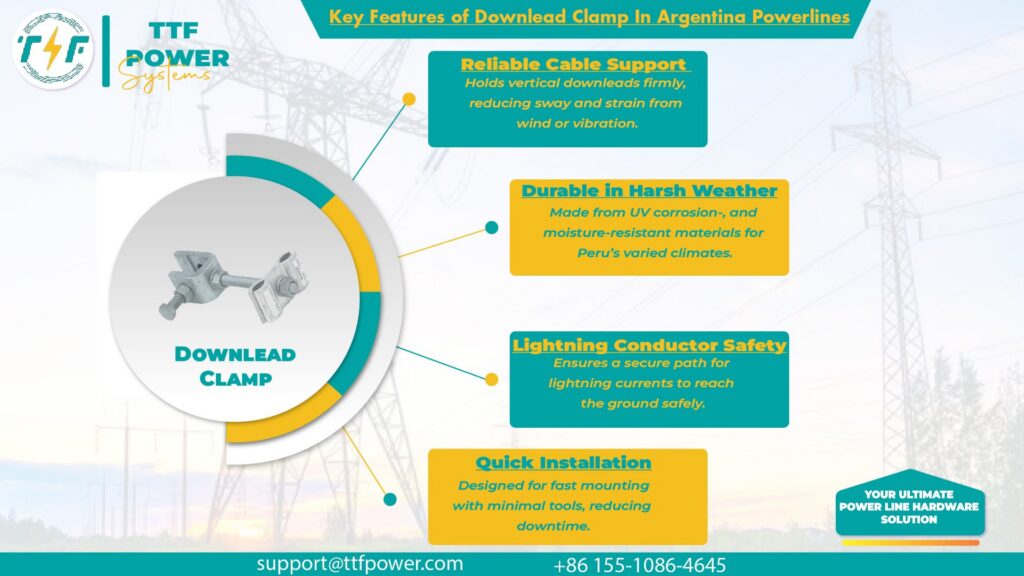
Quality assurance for downlead clamps helps improve operational reliability and project economics. It improves cable protection, reduces maintenance costs, provides better electrical reliability, and increases infrastructure durability. Effective QA helps developers maintain performance guarantees and reduce operational downtime. The QA process includes material testing, corrosion protection verification, dimensional inspections, mechanical load analysis, and installation control. This helps solar developers to ensure durability and operational stability in challenging environments. Poor-quality clamps can lead to cable movement, insulation damage, corrosion, grounding failures, and operational risks. Downlead clamps must integrate properly with tracker and racking systems. The clamp undergoes compatibility checks such as mounting interface dimensions, structural load compatibility, galvanic corrosion prevention, and thermal expansion matching. QA programs for solar hardware ensure the clamps comply with industry standards.
The roles of downlead clamps in Argentina’s solar farms
Downlead clamps offer cable management, protection, and structural support in Argentina’s utility-scale solar farms. They maintain electrical reliability, mechanical stability, and operational safety across photovoltaic infrastructure. The clamps serve on solar tracker structures, mounting frames, transmission poles, substation supports, and inverter and transformer platforms. Here are the roles of downlead clamps in the solar farms:
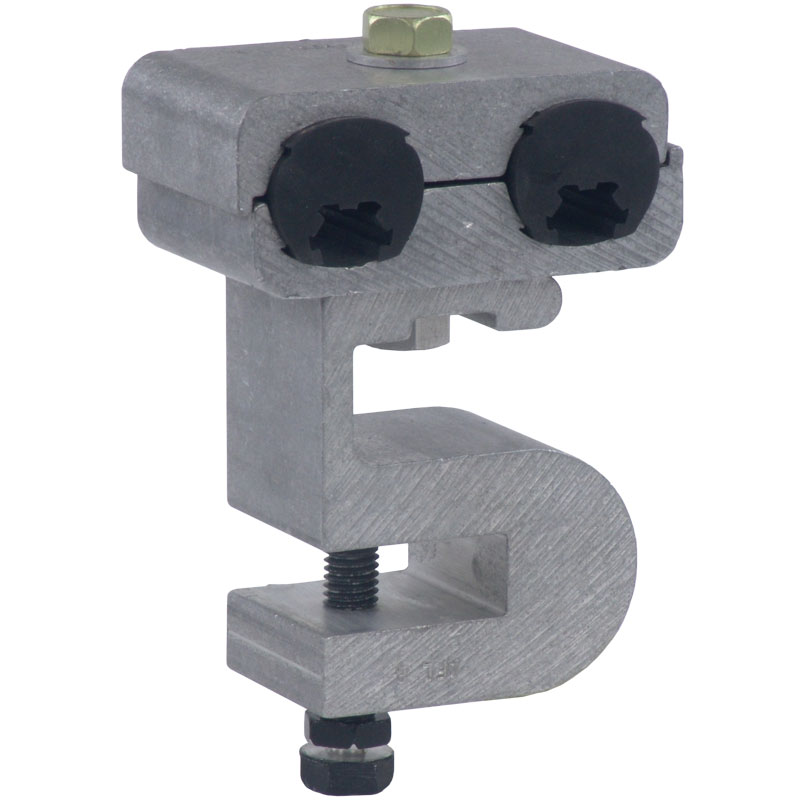
- Cable securing and stabilization – downlead clamps hold cables firmly against support structures to prevent uncontrolled motion. This is because solar farms contain excessive cable networks exposed to environmental forces.
- Protection against mechanical damage – the clamps protect cables from rubbing against metallic structures. Most clamps have rubber inserts, polymer cushioning, smooth contact surfaces, and anti-friction linings.
- Supporting grounding and earthing systems – the clamps secure grounding conductors and bonding cables throughout solar facilities. They maintain grounding continuity, stabilize earth conductors, and protect grounding cable insulation.
- Supporting solar tracker systems—tracker systems involve moving mechanical assemblies that need flexible cable support. Downlead clamps secure moving cables, prevent cable entanglement, and reduce mechanical wear.
Benefits of YPF Luz’s solar farm deployment in Argentina’s energy sector
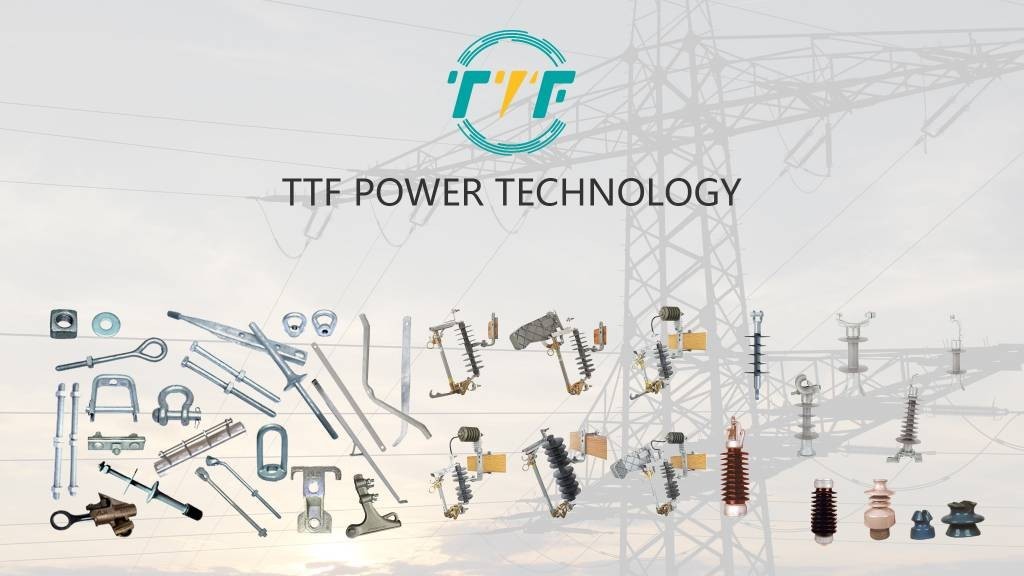
The El Quemado 305MW solar farm in Mendoza is producing structural, economic, and systemic benefits in Argentina’s energy sector. These benefits span generation capacity and influence grid stability, investment flows, and the renewable transition trajectory. The solar farm helps strengthen grid reliability, reduces electricity generation costs, and speeds up investment and financing in energy infrastructure. The project integrates advanced photovoltaic and grid technologies for efficiency. These include bifacial solar modules, single-axis tracking systems, smart inverters with grid support functions, and high-voltage substation infrastructure. Solar farm deployment strengthens Argentina’s grid reliability, reduces energy costs, speeds investment flows, and modernizes infrastructure.