
Peru’s energy and mining ministry proposed an investment and promotion plan for natural gas distributors, Calidda and Contugas. The proposal calls for the installation of 588 km of pipeline, 902 lm of connections, and three regulation stations for Calidda with an investment of $97 million. Also, Contugas’ proposal outlines the installation of 95km of pipeline and 109km of connections with an investment of $9.59 million. The demand for Calidda and Contugas is expected to grow 25% and 8.5%, respectively. Peru’s gas system is anchored by production from the Camisea basin with challenges in distribution. The proposal targets the expansion of the urban and peri-urban pipeline network, the reduction of reliance on LPG cylinders, and improved energy affordability. This development will include the use of upstream processing and gas conditioning, high-pressure transmission engineering, compression management, and distribution network engineering. These connections rely on robust hardware components such as span clamps.
Span clamps secure and support the overhead cables that power and connect remote facilities. Peru’s natural gas infrastructure is mostly in off-grid locations. The clamps secure overhead power lines that supply electricity to drilling rigs, compression plants, and pumping stations. The clamps ensure a stable energy supply in areas with no grid access. Modern gas facilities use SCADA systems for remote monitoring and control. Span clamps suspend the fiber optic and communication cables carrying data from wellheads and pipelines to the central control centers. High-quality span clamps are from durable materials like galvanized steel or aluminum alloys that resist UV radiation. They also help prevent cable slippage and damage from vibration. Span clamps allow the fast installation of overhead power and communication lines to support the modular and low-impact development in Peru.
Quality assurance for span clamps used in natural gas infrastructure in Peru
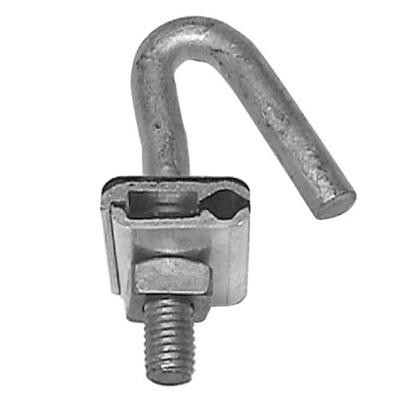
Conducting quality assurance for span clamps used in natural gas infrastructure ensures mechanical integrity and reliability. It ensures the clamps can support loads, maintain alignment, and resist environmental degradation. Span clamps secure pipelines, cables, or auxiliary components used to support structures in crossings or elevated sections. QA begins by validating that the clamp meets load retention without slippage, uniform load distribution, compatibility with pipe diameter and coating systems, and resistance to vibration and thermal expansion effects. Quality assurance controls include mill test certificates, hardness and tensile testing, and impact testing. During span clamp manufacturing, the clamps undergo dimensional verification, weld quality control, and surface finish inspection. It also undergoes other tests like mechanical performance testing, corrosion protection, interface compatibility, and installation quality control. Quality assurance ensures that span clamps deliver mechanical stability, pipeline protection, and operational safety.
Roles of span clamps in natural gas infrastructure
Span clamps secure, stabilize, and manage loads on pipelines and associated systems. Span clamps in gas infrastructure maintain structural and operational integrity. Using quality-assured span clamps contributes to the safety and longevity of the entire gas distribution network. Here are the roles of span clamps in gas infrastructure.
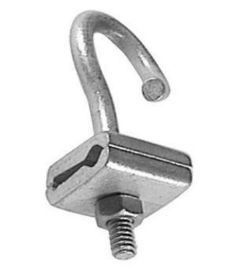
- Pipeline support and load distribution—the span clamps support pipelines across spans by distributing the pipe’s weight and preventing localized stress concentrations on the pipe wall.
- Structural attachment to support systems—span clamps act as the connection interface between pipelines and support structures. They fix pipelines to beams and poles and enable integration with structural frameworks in stations and crossings.
- Control of pipeline movement—span clamps restrict movement and allow controlled sliding. This is crucial in Peru’s environments where temperature variation occurs between day and night.
- Protection of pipeline integrity—span clamps prevent excessive bending, protect external coatings, and maintain safe clearances from adjacent infrastructure.
Importance of developing natural gas infrastructure in Peru’s energy sector
Peru’s development of gas infrastructure influences energy security, economic competitiveness, and the transition toward cleaner fuels. Expanding pipelines and distribution networks reduces dependence on imported fuels to ensure stable energy supply and improve reliability for power generation and industry. Reliable gas supply is crucial for industrial development to support energy-intensive sectors and enhance productivity through stable energy pricing. Additionally, natural gas supply enables efficient gas-fired power plants, provides flexible generation to complement renewables, and reduces reliance on hydropower during drought conditions. Natural gas infrastructure development in Peru supports industrialization, social inclusion, and export capacity.