

Engie Chile recently installed the initial turbines for two significant wind projects as it strives to add 471 MW of new capacity in the nation. Engie Chile is constructing the Pampa Fidelia wind energy project in Taltal, region of Antofagasta. The Pampa Fidelia initiative will deploy 51 wind turbines with a combined capacity of 306 MW. The Chequenes wind farm will have a capacity of 165 MW distributed among 22 wind turbines. The installation involves Goldwind’s 7.5 MW GW182 model turbines. The initiative represents a significant advance in the nation’s clean energy growth. This advancement enhances Chile’s movement towards a carbon-neutral grid and aids in the objectives of eliminating coal. This will need the growth of new transmission and storage capacities. This encompasses grid enhancements, transmission improvements, and energy storage solutions. Employing the deadend pole bands within the infrastructure aids in creating a safe insulated termination location.
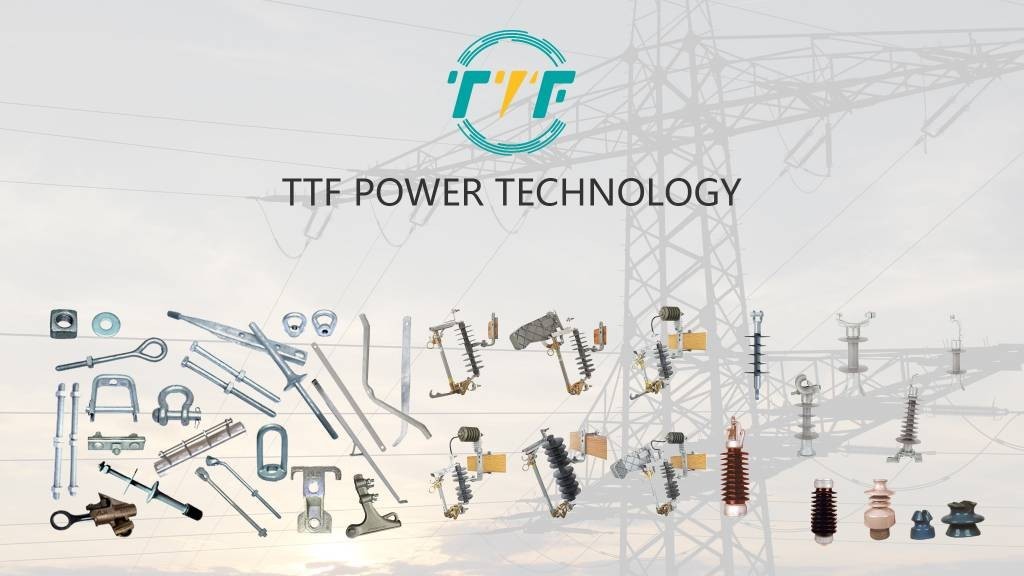
Pole bands ensure the reliability and safety of the internal electrical collection network that ties individual turbines together. It connects them to the main substation. The deadend pole band anchors and absorb tensile loads on overhead lines to prevent pulling. They also transfer the mechanical forces from the wire to the pole and its grounding system.
Deadend pole bands must withstand vibrations and sway caused by wind pressures. It also provides a firm connection that can help manage the dynamic loads on the conductors. This prevents snap-off or whipping lines that cause widespread damage. Modern pole bands clamp onto the insulators to prevent conductor contact. It ensures the electrical integrity of the collection system. A failure could lead to a fault that takes turbines offline.
Impacts of wind farm development in Chile’s energy sector
This initiative by Engie Chile impacts energy security, grid stability, economic advancement, and Chile’s decarbonization efforts. Wind energy decreases dependence on imported fossil fuels, reduces long-term production expenses, and boosts energy autonomy. This growth accelerates the demand for new transmission routes, grid enhancements, and sizable batteries. This enhances the grid and facilitates long-range power transfers from resource-abundant areas to consumption hubs. The improvements in infrastructure ready Chile for growth in renewables.

The installation of wind turbines attracts global participants who introduce cutting-edge turbine technologies, contemporary project management methods, and competitive funding options. This enhances Chile’s position as a reliable and appealing center for renewable investments. Furthermore, contemporary wind farms incorporate battery systems, intelligent controls, and grid-forming inverters. This requires the use of elements like deadend pole bands to maintain and fasten these connections.
Functions of deadend pole bands in wind farms and supporting infrastructure
Deadend pole bands anchor, support, and secure conductors and hardware on poles within power networks. They keep overhead distribution and sub-transmission infrastructure stable, safe, and reliable. The use of deadend pole bands ensures durability in harsh conditions and enables reliable interconnection with modern grids. They help Chile’s wind farms achieve high reliability, safety, and operational continuity. Its functions include:

- Integrate overhead lines with grid-forming and substation equipment—deadend pole bands provide stable anchoring at the transition points. They ensure electrical assets have consistent mechanical loading and reduce the risk of faults.
- Anchor fiber and communication lines—deadend pole bands secure fiber optic cables, communication drops, and monitoring and control lines.
- Maintain structural stability—the pole bands distribute mechanical loads around the pole and prevent conductor twisting. This is crucial for preventing pole damage or conductor failure.
- Anchor conductors—deadend pole bands serve as the primary attachment point for deadend assemblies. The bands ensure that mechanical tension from conductors is transferred to the pole without slippage.
Technologies supporting Engie Chile’s wind turbine development
Engie Chile employs technologies that enable superior efficiency to enhance production in the wind areas of Chile. The technologies combine intelligent controls, improve aerodynamics, and offer grid-support capabilities. The technologies are as detailed in the following sections.
- High-capacity turbines—Engie’s wind farms use 4-6 MW class turbines featuring extended rotor blades, increased hub heights, and enhanced pitch controls.
- Intelligent control systems—current turbines incorporate vibration and load sensors, real-time weather data, and adaptive pitch control systems. These enable the turbines to foresee shifts in wind flow, change blade angles, and minimize mechanical strain.
- Grid-forming and grid-supporting capabilities—Engie utilizes turbines equipped with sophisticated grid-supporting functionalities. These consist of voltage and frequency control, ride-through ability, and reactive power assistance.
- Cutting-edge blade materials—the initiative employs state-of-the-art blade techniques like serrated trailing edges to cut noise and carbon-fiber-reinforced substances.