
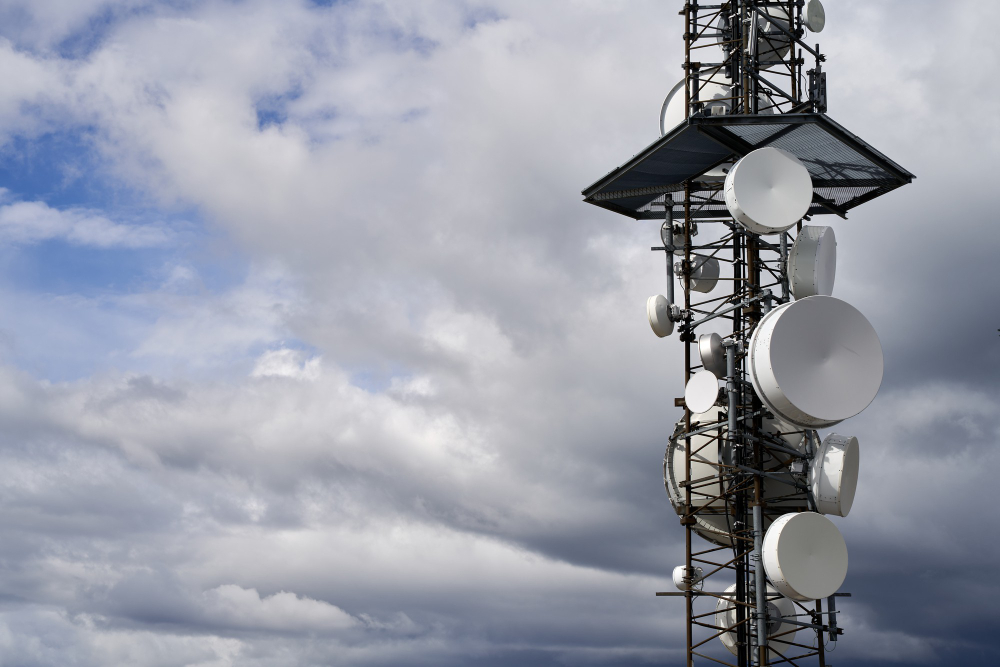
ZTE Corporation recently had a CoMP SD breakthrough and high-power ODU that enables ultra-long 110 km backbone transmission in the Amazonian environments. The backbone microwave network will integrate with transmission networks to reduce the amount of hardware needed. It will also help lower customers’ capital expenditure and provide strong support for the upgrade of backbone transmission services in the region. The Peru project extends the transmission distance of the SD solution to 110 km. It provides a replicable technical reference for ultra-long distance. ZTE will drive technological innovation, enhance product quality, and deliver trusted solutions to networks. Additionally, Peru’s renewable electricity production is expanding, with generation increasing by 20%. More solar and wind projects connect to the grid with communication infrastructure. High-availability microwave links provide communication pathways between renewable-energy facilities, substations, and grid-control infrastructure. The interconnection between the networks relies on high-quality socket clevis to support the physical infrastructure.
The socket clevis is a load-bearing fitting designed to connect a suspension clamp to an insulator string. The clevis creates a flexible, articulated joint, secured with a clevis pin and cotter key. This articulation allows the assembly to pivot under mechanical stress like wind or ice loading. The clevis transfers the full mechanical load of the conductor and any attached equipment to the tower structure. It helps maintain electrical continuity along the line and ensures it’s not a point of high resistance. The microwave networks with transmission lines interconnect with OPGW cables. It acts as the lightning shield wire for the power grid while also housing optical fibers for high-speed data transmission. High-quality socket clevis support the OPGW and the microwave infrastructure.
Quality assurance for the socket clevis used in microwave networks in Peru
A socket clevis connects insulator strings, links, yoke plates, and other fittings in overhead lines and utility hardware. The interconnection with transmission lines uses socket clevises to enhance the mechanical reliability of related overhead electrical infrastructure. Using quality-assured socket clevises can withstand exposure in mountainous, coastal, desert, and tropical environments. The QA process covers material quality, dimensional accuracy, mechanical strength testing, manufacturing quality, corrosion protection, and interface testing.
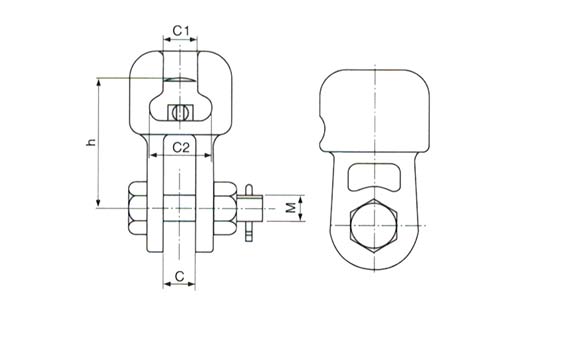
Additionally, the socket clevis pin undergoes quality assurance to ensure correct diameter, material strength, surface finish, corrosion protection, and dimensional tolerances. During installation in the transmission and microwave networks, installation teams verify correct socket-clevis specification, correct orientation, compatible mating components, proper pin installation, correct locking arrangement, and absence of visible damage. Improper installation can reduce the mechanical performance of the hardware. Quality-assured socket clevises reduce mechanical failure, corrosion-related deterioration, incorrect assembly, premature component replacement, and failures caused by manufacturing defects.
The roles of socket clevis in backbone microwave networks and transmission networks
The socket clevis forms part of the overhead transmission-line hardware supporting the networks. It also supports microwave systems, including antennas, radios, transmission lines, power suppliers, grounding systems, and network equipment. Here are the roles of the socket clevis in the networks.
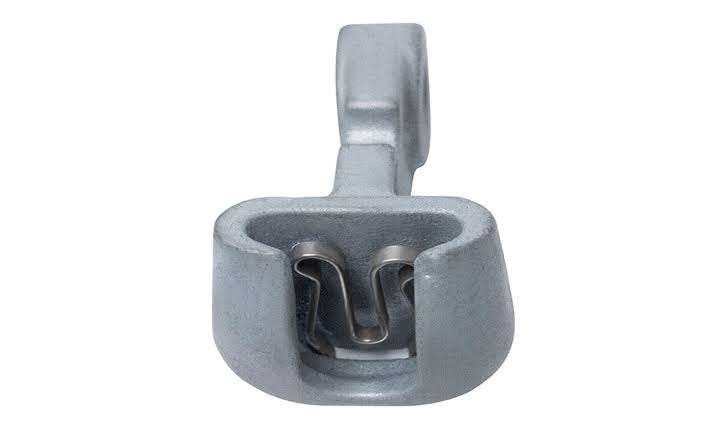
- Connecting transmission line components—the socket clevis creates a secure mechanical connection between compatible components in the overhead networks.
- Supporting mechanical loads—the clevises transfer the loads between connected components in transmission lines. Their mechanical strength contributes to the stability of the insulator and the conductor assembly.
- Supporting reliable transmission infrastructure—the socket clevis in the networks maintains mechanical continuity, secure component connections, load transfer, and correct insulator assembly.
- Supporting renewable-energy transmission—solar and wind generation infrastructure needs reinforced transmission infrastructure to connect generation facilities to the grid. Socket clevises support the mechanical integrity of the transmission part of the system.
Backbone microwave networks supporting grid monitoring and control in Peru
Backbone microwave networks provide the communications infrastructure connecting the power system assets with control centers. They transport the operational data needed to monitor, protect, and control the transmission network. It does so by connecting remote substations to control centers, supporting SCADA communications, enabling remote equipment control, supporting transmission-line monitoring, improving fault detection and response, and supporting renewable-energy integration. As Peru expands its transmission infrastructure, grid modernization is critical at substations and other network assets. A digitally connected substation can automatically collect information from many devices and send it through the communication network. The microwave networks contribute to the movement of operational information needed for SCADA, monitoring, automation, fault response, protection coordination, and remote control.