
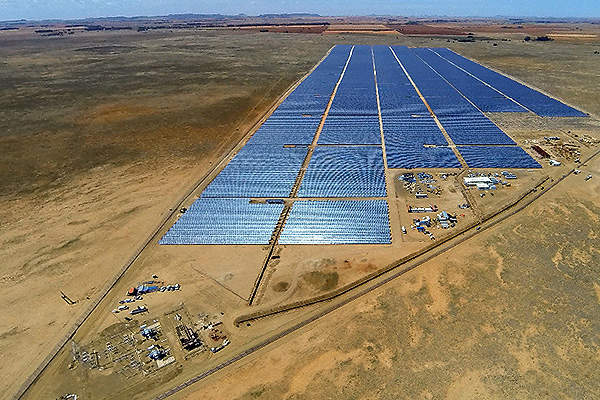
Argentina’s growth in solar PV includes 7,980 MW of installed renewable energy and demonstrates a market that has gained operational credibility in the region. The expansion was driven by organized purchasing processes. This led to a lineup of operational assets that currently show bankable performance records, offer data-supported yield and reliability standards, and allow refinancing as well as secondary market transactions. The 8GW renewable capacity foundation is backed by structural elements like resource benefits, demand-side influence, and cost reduction. This variety decreases dependence on government-supported programs and aligns the market with worldwide solar investment trends. Argentina’s solar PV path is now marked by targeted growth, increased focus on performance enhancement and asset efficiency, as well as the incorporation of storage and grid-support technologies. Employing slack span deadends in solar PV controls cable slack and offers strain relief for extensive DC collection systems
Their use addresses specific challenges like undulating terrain and long cable pulls. Slack span deadends hold excess cable length and prevent stress on terminations due to soil settling and thermal movement. The deadends anchor the cable at intermediate points and absorb the pulling tension. Slack span deadends release pre-measured slack without requiring a splice to reduce downtime. The deadends feature a single bolt quadrant design to allow linemen to clamp the cable without specialized hydraulic tools.
Quality assurance for slack span deadends used in solar PV plants
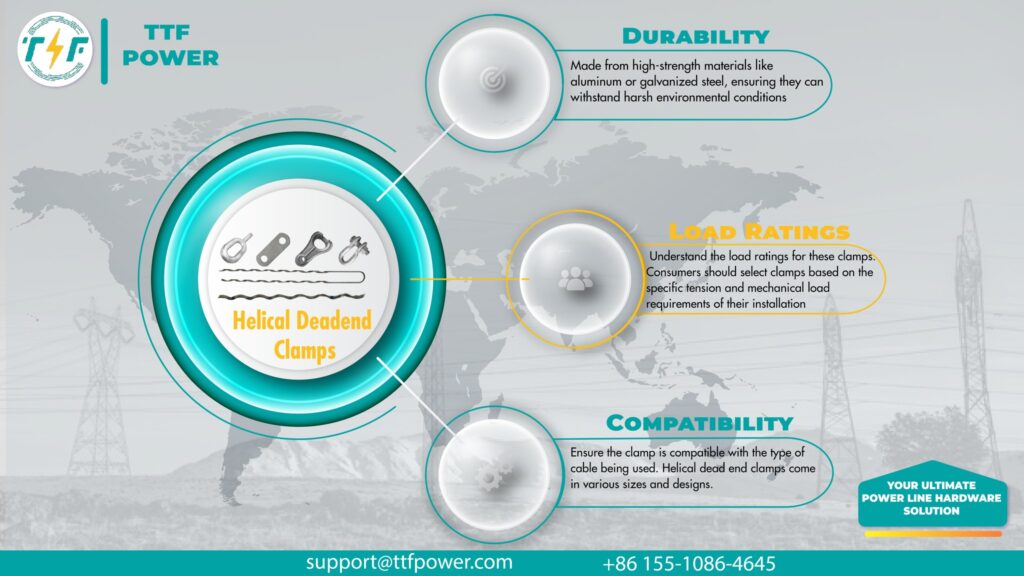
Conducting quality assurance for slack span deadends in solar PV plants ensures mechanical integrity, electrical continuity, and reliability under variable load conditions. The deadends manage conductor tension at termination points with reduced mechanical stress. Slack span deadends use hot-dip galvanized steel, aluminum alloys, and composite elements. Material certification checks include chemical composition analysis, mechanical properties, and coating thickness verification. QA prevents failures such as corrosion in high-irradiance and high-temperature PV environments. Quality assurance processes for the deadend include manufacturing process control, mechanical testing, electrical performance validation, and durability testing. Field QA involves torque verification for bolts and clamps and proper conductor seating and inspection for installation-induced damage during installation. It prevents failures such as inadequate compression leading to conductor slippage, substandard galvanization, misaligment causing uneven load distribution, and micro-cracks from poor forging or casting processes.
The functions of the slack span deadends in Argentina’s solar PV plants
Slack span deadends in solar PV plants perform mechanical and operational roles tied to conductor management. They are crucial for thermal variability, wind exposure, and long-span layouts. The deadbeds offer tension control, mechanical isolation, and durability. Their application influences conductor lifespan, structural integrity, and operational stability across the solar plant. Here are the functions of the slack span deadends in Argentina’s solar PV plants.
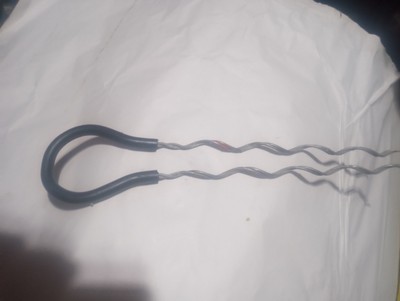
- Controlled termination of conductors—slack span deadends terminate conductors where full mechanical tension is not necessary. They secure the conductor at end points and prevent conductor movement without imposing excessive tensile loads.
- Load distribution and stress mitigation—slack span deadends absorb thermal expansion, reduce mechanical fatigue, and reduce the risk of strand breakage.
- Structural decoupling of line sections—the deadends isolate mechanical loads between adjacent spans. They prevent the transfer of excessive tension from one span to another.
- Vibration and wind load management—the deadends limit conductor oscillation by stabilizing endpoints. They also prevent mechanical wear at clamping interfaces within the solar plant.
- Integration with PV plant layouts—modern solar PV plants use extensive cable routing across tracker rows and combiner stations.
The challenges posed by technology and the emerging market in Argentina’s solar PV sector.
Argentina’s solar PV is entering a phase that is both technologically advanced and operationally limited. The growth is influenced by system intricacy, performance demands, and market structural risks. These engagements shape the possibilities and the rising difficulties. These difficulties consist of:
- Market evolution influenced by technology – the market is embracing advanced PV technologies featuring high-power modules, improved performance ratios, and decreased module costs.
- Tracker systems and AI-powered controls – single-axis trackers provide the incorporation of AI-enhanced control systems to maximize positioning and safeguard against severe weather conditions.
- Digitalization and performance metrics – Argentina’s solar facilities are data-driven resources that use SCADA (Supervisory Control and Data Acquisition) systems for continuous monitoring, predictive maintenance strategies, and performance evaluation.
- The blending of solar and storage—battery integration is becoming an essential technology component due to decreasing battery prices and hybrid PV-storage systems enhancing dispatchability and revenue generation.